
Feeding pumpkin seeds to your chickens is a simple process. Here’s a step-by-step guide on how to do it:
- Select Pumpkins: First, choose pumpkins that are in good condition and free from rot or mold. You can use both fresh pumpkins or pumpkins you’ve stored after Halloween or the fall season.
- Cut the Pumpkins: Cut the pumpkins open, creating a large opening. You can cut the pumpkins in half or into manageable chunks, depending on the size of your flock and the size of the pumpkin.
- Place in the Coop or Run: Simply place the pumpkin halves or chunks in your chicken coop or run. Chickens will naturally peck at the pumpkin flesh and seeds, and it will keep them entertained for a while.
How should I prepare pumpkin seeds for chickens?
- Prepare the Pumpkins: Cut the pumpkins open. Remove the seeds and any stringy flesh attached to them. You can use a spoon to scoop out the seeds.
- Rinse and Clean: Rinse the seeds under cold water to remove any remaining pumpkin flesh. This helps ensure that the seeds are clean and free from any potential contaminants.
- Dry the Seeds: Allow the seeds to air dry. Spread them out on a clean surface or use a baking sheet to speed up the drying process. Make sure they are completely dry before feeding them to your chickens.
Can chickens eat pumpkin flesh as well as the seeds?
Yes, chickens can also eat pumpkin flesh. It’s a good way to reduce waste when you carve or prepare pumpkins for other purposes.
Store: If you have more pumpkin seeds then you can use immediately. You can store them in a cool, dry place in an airtight container until you’re ready to feed them to your chickens.
Are there any specific types of pumpkins that are best for chickens?
You can feed any type of pumpkin to chickens. Some people prefer smaller or sugar pumpkins. They have a higher seed-to-flesh ratio.
Feeding: You can feed the pumpkin seeds to your chickens as a treat. Scatter them in the chicken coop or run, or you can place them in a feeder or dish. Your chickens will peck at them and enjoy the treat.
Track: It’s important to watch your chickens. Make sure they’re not overindulging in pumpkin seeds. While pumpkin seeds are a healthy treat, you should give them in moderation. Too many can lead to digestive issues.
Can pumpkin seeds replace regular chicken feed?
No, pumpkin seeds should not replace regular chicken feed. They are a supplemental treat rather than a primary source of nutrition.
Balanced Diet: Pumpkin seeds should not replace their regular chicken feed. Ensure that they have access to their balanced chicken feed to meet their nutritional needs.
Fresh Water: Always provide your chickens with clean, fresh water. Especially when giving them treats like pumpkin seeds.
Variety: You can also mix pumpkin seeds with other chicken treats. Such as mealworms, fruits, or vegetables. To provide your chickens with a variety of flavors and nutrients.
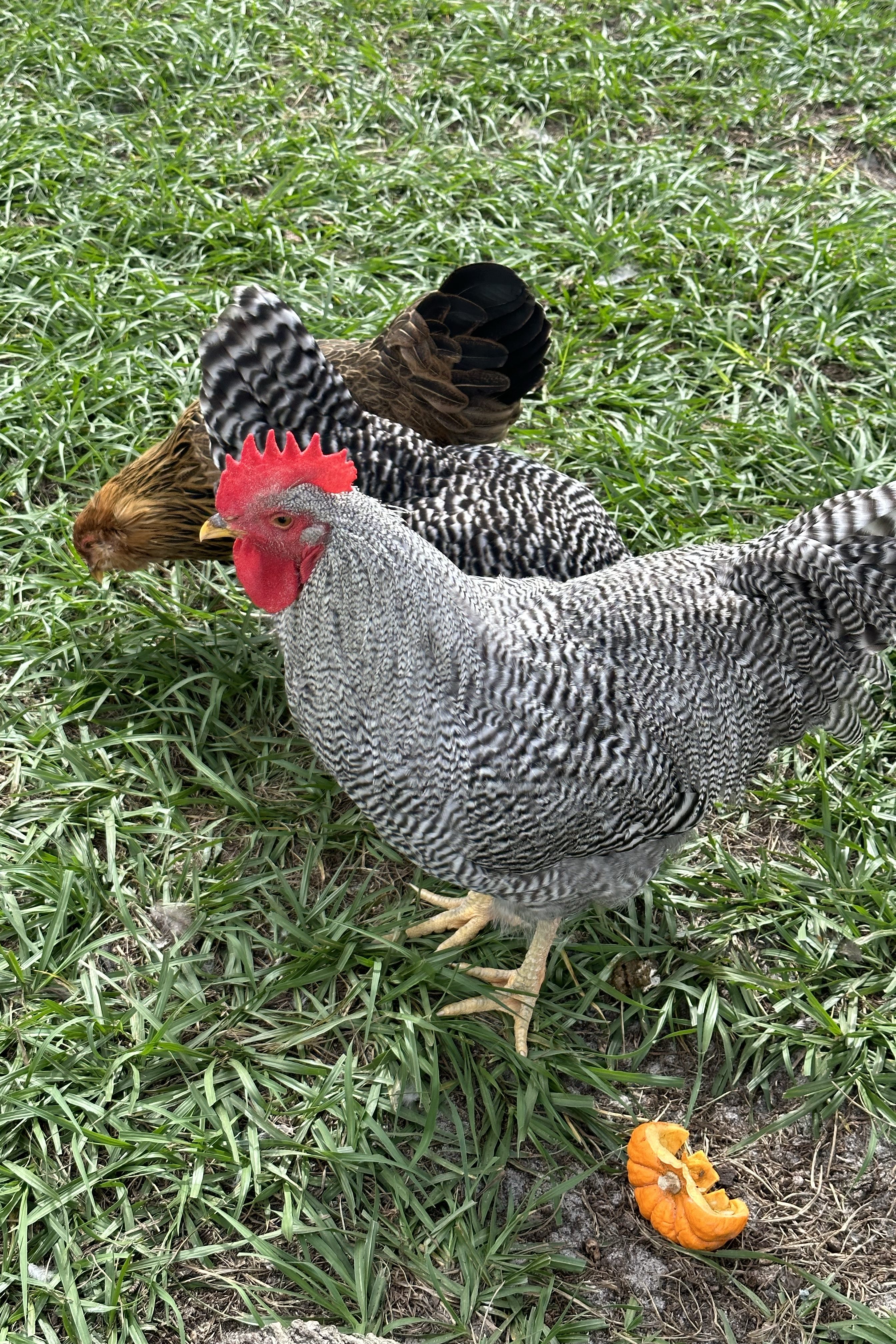
Can chickens eat pumpkin seeds?
Yes, chickens can eat pumpkin seeds. They are a nutritious and tasty treat for chickens.
Benefits of pumpkin seeds for chickens
Are there any benefits to feeding chickens pumpkin seeds?
Nutritional Benefits:
Pumpkin seeds are a good source of;
- Protein
- Fiber
- Minerals
- Zinc
- Magnesium
- Healthy Fats
- Various Vitamins
They can provide a nutritious supplement to a chicken’s diet.
Small Preventative Effect on Deworming:
Pumpkin seeds contain compounds like cucurbitacin that may have natural deworming properties. Feeding pumpkin seeds to chickens may help reduce the risk of internal parasites.
Healthy Feathers:
The healthy fats in pumpkin seeds can contribute to feather health. Helping to improve feather quality. Making shiny chicken feathers.
Treat and Enrichment:
A healthy snack for your chickens. Chickens enjoy pecking at and eating seeds. Offering them as a treat or enrichment can reduce boredom and stress in the flock.

Cons
Are there any potential issues with feeding chickens pumpkin seeds?
While pumpkin seeds are generally safe for chickens. You should avoid feeding them in excessive amounts. Overindulgence can lead to digestive issues. Moderation is key.
High Fat Content:
While healthy fats are beneficial in moderation. Pumpkin seeds are high in fat. Excessive fat intake can lead to obesity and other health issues in chickens. If not balanced with their regular diet.
Imbalance in Diet:
Consider pumpkin seeds a treat or supplement. Rather than a primary source of nutrition. If chickens eat too many pumpkin seeds, they might not eat enough of their regular balanced feed. Which can leading to nutritional imbalances.
How often can I give pumpkin seeds to my chickens?
You can give pumpkin seeds to chickens as an occasional treat. They shouldn’t make up a significant part of their diet. Offering them once or twice a week is a good practice.
Seed Shells:
The shells of pumpkin seeds can be tough and may be difficult for chickens to digest. This can potentially lead to digestive issues if consumed in excessive quantities.
Should I feed pumpkin seeds to chickens in the shell or hulled?
Yes. You can feed chickens both hulled and whole pumpkin seeds. Hulled seeds are easier for chickens to eat. Whole seeds can provide extra entertainment and exercise as chickens peck at them.
Allergies:
Some chickens may have allergies or sensitivities to certain foods, including pumpkin seeds. It’s a good idea to introduce new foods gradually and watch your chickens’ reactions.
Cost:
If you don’t have an available source of pumpkin seeds, the cost of purchasing them as a supplement can add up. Especially if you have a large flock.
-
9 Ingredients to Avoid in Chicken Feed
Ingredients to avoid when shopping chicken feed When buying chicken feed, it’s essential to avoid certain harmful or inadequate ingredients. Such ingredients may be harmful to your chickens. Here are some ingredients to avoid: 1. Medicated Additives: Some chicken feeds contain medications such as antibiotics or coccidiostats. Unless a veterinarian prescribes them for a specific health…
-

Feeding Chickens Pumpkin Seeds
Feeding pumpkin seeds to your chickens is a simple process. Here’s a step-by-step guide on how to do it: How should I prepare pumpkin seeds for chickens? Can chickens eat pumpkin flesh as well as the seeds? Yes, chickens can also eat pumpkin flesh. It’s a good way to reduce waste when you carve or…
-

DIY Calcium Supplement for Chickens
Benefits of Calcium Supplements for Chickens Especially for Laying Hens Stronger Eggshell Quality: Strong and more durable egg shells is the primary benefit of calcium supplement. Calcium is a vital part of eggshell formation. A deficiency can result in thin or soft shells that are prone to breaking or other problems. It helps reduces losses…


 Sunrise Chores for Small Animal Farm
Leave a comment