
Benefits of Fermented Chicken Feed
Homemade fermented probiotic chicken feed is a good idea for your backyard chickens. Here are 5 reasons why.
- Improved Digestibility
- Starches and antinutrients are plant compounds in chicken feed that lowers the chicken’s ability to get the nutrients from the feed. What the fermentation process does is break these compounds down to make the feed more digestible for chickens.
- Enhanced Nutrient Availability
- This Increases the availability of certain nutrients, likely leading to better nutrient absorption.
- Probiotic Benefits
- The fermentation process also brings good bacteria (probiotics) that support gut health. Helping to reduce the risk of digestive issues.
- Reduced Feed Waste
- Wet fermented feed has less feed waste compared to dry feed because it is not as dusty and crumbly. Saving you money!
- Appetizing
- Some chickens prefer the taste of fermented feed encouraging them to eat a more healthy chicken diet.
Many chicken owners find fermented feed to be beneficial and more affordable for their flock. It’s a good practice to monitor your chickens’ health and adjust their diet as needed.

What the Cluck is your comprehensive guide to every aspect of chicken keeping, guiding you from choosing the perfect breed to setting up their coop and optimizing their diet for optimal health. This Omlet guide covers it all, including some delightful egg recipes to enjoy along the way.
Signs and Symptoms That Your Chickens Need Fermented Food
While fermented chicken feed can be a good addition to your chickens’ diet, it’s not always necessary for every flock. Whether your backyard chickens need fermented food depends on their overall health, the quality of their current diet, and other signs of dietary problems. Here are some signs that might show a potential need for fermented food.
- Digestive Problems
- If your chickens has digestive issues often such as diarrhea or pasty vent, giving fermented food with probiotics might help improve your chickens’ digestion.
- Slow Growth or Feather Quality
- Signs of nutrient absorption problems in young chickens can be slow growth and in older chickens can be poor feather quality.
- Stress or Illness
- Environmental changes, molting and illness can be stressful on chickens, fermented feed helps ease their digestive systems.
- Reduced Egg Production
- A drop in egg production can be from diet-related issues, fermented feed can provide better nutrient absorption and support overall health.
- Respiratory Issues
- Reducing dust from dry feed can help your chickens if they are having respiratory problems.
- Preference for Wet Feed
- Some chickens prefer the taste and texture of wet feed.
- Desire to Improve Gut Health
- Healthy chicken diet is great for their overall well-being.
Remember that fermented feed is just one option among many for providing a balanced and nutritious diet to your chickens. Consider factors like age, breed, and specific dietary requirements when deciding whether to include fermented feed into their healthy diet.
How to Make Fermented Chicken Feed
DIY fermented chicken feed at home is pretty straightforward, but it does require daily attention and good hygiene to avoid spoilage and contamination. Here are the steps for homemade probiotic chicken feed.
Materials
- Chicken feed (grains, pellets, or mash)
- Water
- Airtight storage container for fermenting (e.g., a bucket or jar with a lid)
- A stirring utensil
- Access to clean drinking water

Steps
- Prepare the Fermenting Container
- Start with a clean container and lid. The container’s size will depend on the number of chickens you have and how much feed they eat regularly.
- Add Chicken Feed
- Add the desired amount of chicken feed to the container. A typical ratio is about 1:1 or 1:1.5 of feed to water by weight, but you can adjust this based on your preferences.
- Add Water
- Pour water into the container to cover the feed completely. Use non-chlorinated water if possible, as chlorine can slow down fermentation. If you’re using tap water, let it sit out for a day to allow chlorine to evaporate.
- Mix Thoroughly
- Stir the feed and water mixture thoroughly to ensure that all the feed is wet. The consistency should be like wet oatmeal. Add more water if necessary to get this consistency.
- Cover and Let Ferment
- Seal the container with a lid to keep out contaminants and bugs.
- Fermentation Process
- Place the container in a warm, room-temperature location, away from direct sunlight. The fermentation process typically takes 24 to 48 hours. During this time, beneficial bacteria will develop, and the mixture will bubble and sour.
- Stir Daily
- Every day during the fermentation process, open the container and stir the mixture. This helps distribute the beneficial bacteria and prevents mold growth. If the mixture becomes too thick, you can add a bit of water.
- Check for Readiness
- After 24 to 48 hours, the fermented feed should have a slightly sour smell, and it should appear bubbly and have a softer texture. It’s now ready to feed to your chickens.
- Feed to Chickens
- Scoop out the desired amount of fermented feed and offer it to your chickens in their feeders. Make sure to clean their feeders regularly to prevent any buildup of spoiled feed.
- Store Unused Fermented Feed
- Store any unused fermented feed in airtight containers in a cool, dry place, or refrigerate it to extend its shelf life.
- Maintain a Source of Clean Water
- Always provide fresh, clean water for your chickens to drink alongside the fermented feed.
- Observe Your Chickens
- Monitor your chickens’ health and how they respond to the fermented feed. Some chickens may take a little time to adjust to the new diet.
Remember that while fermented feed can have benefits, proper hygiene and daily maintenance are essential to prevent spoilage or contamination. Adjust the feeding ratios and fermentation time based on your chickens’ preferences and your observations of their health and well-being.

What Kind of Chicken Feed Can be Fermented?
You can ferment various types of chicken feed, including:
- Layer Pellets, these are typically used for laying hens.
- Layer Crumbles, similar to pellets but in a crumbled form.
- Chick Starter Feed, for young chickens to provide probiotics and aid in digestion.
- Whole Grains, corn, wheat, oats, and barley. These are often used as scratch grains or supplemental feed.
- Mash, Chicken mash is a finely ground mixture of grains and other ingredients.
- Poultry Scratch Grains, These are a combination of various grains and seeds that can be a treat for chickens.
- Broiler Feed, Feed formulated for meat chickens.
It’s important to consider the specific nutritional needs of your chickens when choosing which feed to ferment. Also, you can ferment a combination of different feeds to provide a balanced diet. Just ensure that the feed you select doesn’t contain additives or medications that could be compromised by the fermentation process. Always monitor your chickens’ health when introducing any dietary changes.
Cons of Fermented Chicken Feed
Fermented chicken feed has both pros and cons, which should be considered when deciding whether to use it for your chickens. Here are some disadvantages.
- Time-Consuming
- Preparing fermented feed can be time-consuming and requires daily maintenance.
- Risk of Spoilage
- If not properly managed, fermented feed can spoil quickly, leading to mold or bacterial contamination.
- Equipment Needs
- You may need specific containers and utensils for fermentation, adding to the overall cost and complexity.
- Variable Results
- The success of fermented feed can vary, and not all chickens may readily accept it or benefit from it.
- Learning Curve
- It may take time to learn how to properly ferment feed, and mistakes in the process can impact its effectiveness.
It’s important to weigh these pros and cons and consider your specific situation and goals when deciding whether to make fermented feed for your chickens.

How Long is Fermented Chicken Feed Good for?
Fermented chicken feed can go bad. The shelf life can vary depending on temperature, humidity, and the specific ingredients used in the feed. In general, properly fermented chicken feed can last for about 5 to 7 days when stored in a cool, dry place.
Here are some tips to help prolong shelf life.
- You can refrigerate fermented chicken feed. Putting it in the refrigerator can help keep it fresh for up to 2 weeks or more!
- Seal the container tightly.
- Label and date to keep track of its freshness.
- Avoid storing in the freezer because it can affect the texture and quality of the feed.
- You can store the fermented feed in airtight containers or plastic bags with as little air as possible to prevent mold growth.
- You can reduce the risk of contamination by cleaning the containers, utensils, and vessels used for making fermented feed.
- Check feed for sign of spoilage like mold, weird smells, or unusual discoloration.
- Make smaller batches to allows the feed to get eaten within a reasonable time.
Remember that the fermentation process can vary, so it’s essential to monitor the feed closely and use your best judgment regarding its freshness for your chickens.

What Does Fermented Chicken Feed Look & Smell Like?
Fermented chicken feed can have a unique appearance and smell compared to dry feed. Here’s what properly fermented chicken feed typically looks and smells like.
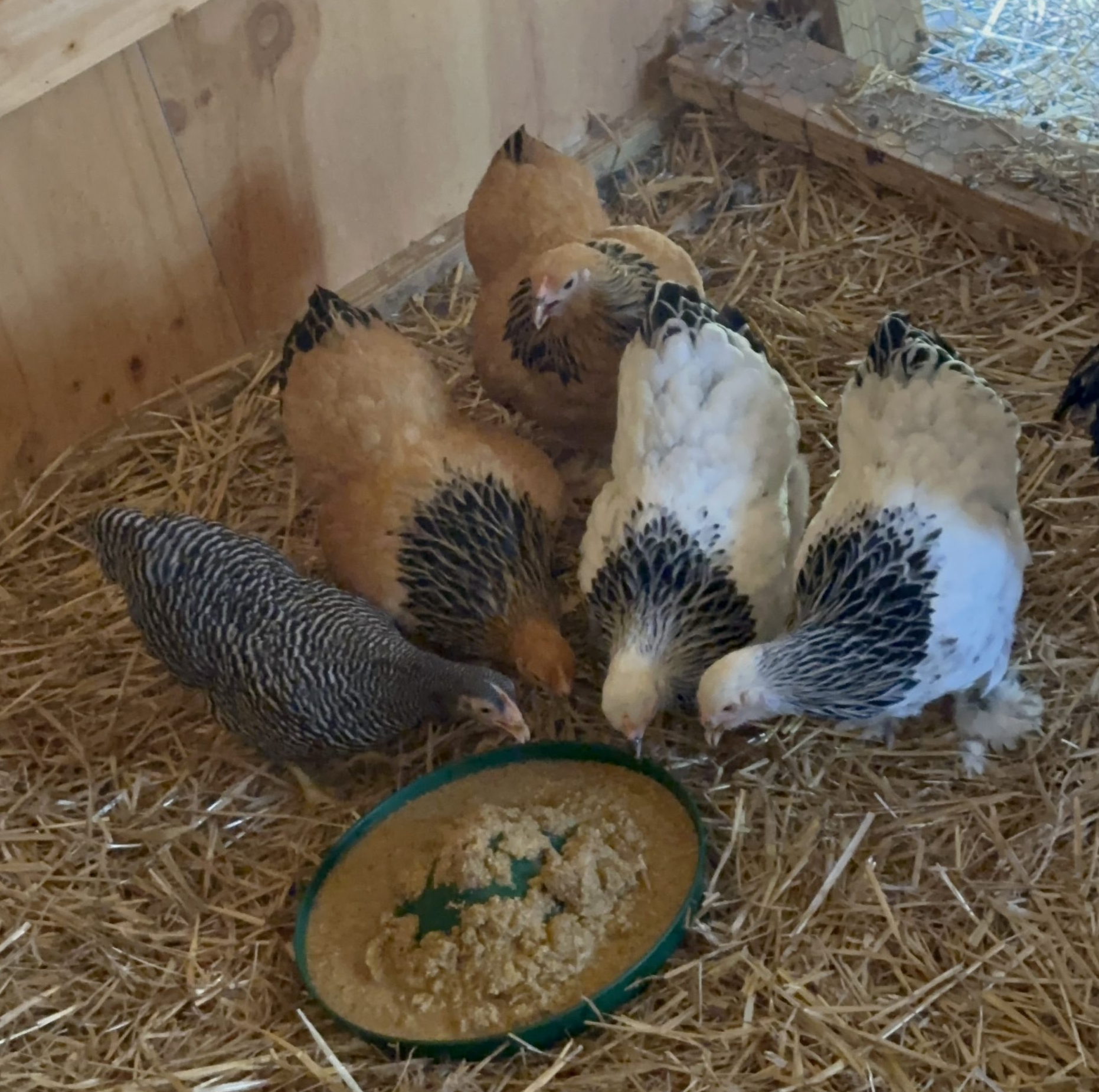
- Fermented feed has a softer, mushier texture compared to dry feed. It can resemble wet oatmeal or porridge.
- The color of fermented feed can vary depending on the type of feed used. It might appear slightly darker or have a mottled appearance due to the fermentation process.
- You may notice small bubbles or foam on the surface of the fermented feed. This is a normal byproduct of the fermentation process and indicates the presence of beneficial bacteria.
- Properly fermented feed should have a slightly sour or tangy smell, similar to sourdough bread or yogurt. This aroma is because of the presence of beneficial bacteria. It should not have an unpleasant or foul odor. If the feed has a strong, foul smell, it could be spoiled, and it should not be fed to your chickens. It’s a good practice to use your sense of smell to gauge the readiness of fermented feed.
- There should be no visible mold growth on the surface of the feed. Moldy feed is a sign of spoilage and should not be fed to chickens.
- The feed should have a consistent, uniform texture throughout, with no pockets of dry or unfermented feed.
It’s important to note that the appearance and smell of fermented feed can vary based on factors such as the type of grains or pellets used and the length of the fermentation process. Properly fermented feed is safe and beneficial for chickens, but it may take some time for them to adjust to the new texture and taste if you are transitioning from dry feed.
-
9 Ingredients to Avoid in Chicken Feed
Ingredients to avoid when shopping chicken feed When buying chicken feed, it’s essential to avoid certain harmful or inadequate ingredients. Such ingredients may be harmful to your chickens. Here are some ingredients to avoid: 1. Medicated Additives: Some chicken feeds contain medications such as antibiotics or coccidiostats. Unless a veterinarian prescribes them for a specific health…
-
Feeding Chickens Pumpkin Seeds

Feeding pumpkin seeds to your chickens is a simple process. Here’s a step-by-step guide on how to do it: How should I prepare pumpkin seeds for chickens? Can chickens eat pumpkin flesh as well as the seeds? Yes, chickens can also eat pumpkin flesh. It’s a good way to reduce waste when you carve or…
-
DIY Calcium Supplement for Chickens

Benefits of Calcium Supplements for Chickens Especially for Laying Hens Stronger Eggshell Quality: Strong and more durable egg shells is the primary benefit of calcium supplement. Calcium is a vital part of eggshell formation. A deficiency can result in thin or soft shells that are prone to breaking or other problems. It helps reduces losses…
This post contains affiliate links.


 Sunrise Chores for Small Animal Farm
Leave a comment